Home / Asia / India
India Travel and tourism
India | Flag of india | Politiical Map of India
Capital : New Delhi
It is very natural for a subcontinent as diverse as India to carve out a distinct identity of its own. India has achieved this diversity because of its various cultures, geographical diversity, vibrant people, colorful costumes and several religions. In spite of its diversity, the country has achieved unity. You can enjoy customised tours and covers all facets of the country.
The geography of India encompasses the landscapes that include snow-capped mountains, fertile Gangetic plains, long coastal plains, arid desert, rain forests and plateaus. If you are a nature lover, India will surely fascinate you. Moreover, the country is also a haven for terrestrial and aquatic animals, birds, flora and fauna.
The true identity of India always harmonizes into one central core of entity. Hailing from different castes and creeds, Indian people are generous and hospitable. They are steeped in their tradition and culture. It is also the only country that has various religions such as Hinduism, Christianity, Islam, Buddhism, Sikhism, Jainism and Parsi. The pious devotees of the world visit India for spiritual enrichment. India has countless temples, mosques, churches, gurudwaras and other places of worship. If you are a religious person, the India will definitly relax your soul.
India also draws global attention for its vibrant cultural spectrum. The dances of India can be broadly divided into classical and folk dances. The trained professionals usually perform Indian classical dance and the folk dances are primarily performed by the common people. Some of the classical dance forms of India include Kathak, Kathakali, Bharatnatyam, Oddisi and others. Know about the various dance forms of India, dance costumes and eminent dancers by travelling through.
However, it won’t be appropriate to consider India only as a land of tradition and old customs. The country also offers an urban image to the world. Its cosmopolitan look is rightly captured by the fashionable Indian attires, modern buildings and famous personalities. Indian film industry also captures the true essence of modern India.
The colorful India: Culture and Traditions

The essence of India lies in its traditions that is iconic of its cultural heritage. The same also give rise to overwhelming number of festivals. With inherited traditional concentrates and dilutions attributed by modernism, the flavors keep evolving with time and keep changing from one state to another , city to city and even villages to villages. But the spirit behind all this, never changes. The spirit, signifying the authority of God and celebrating His creation, paying tribute to his rule and seeking His love and protection, makes the whole experience very special. And so the unity in diversity never seem to detach from the central idea of spirituality. India has always been a spiritual country.
The Spiritual Nation

Indians have many faiths to keep. The primary ones are Hinduism, Islam, Christianity and Sikhism.
The religious spread is uniform except for Sikhism which is concentrated in the northern belt and Christianity which is more popular in the east and southern coastal land. Out of all, Hinduism and Sikhism originated in the country.
Culture and religion are entwined together and offer the people of the land all the freedom of connecting to Almighty. This teaches mutual tolerance. Hence the special effect of culture on religion makes the ethos of a religious community very inviting
Taj mahal
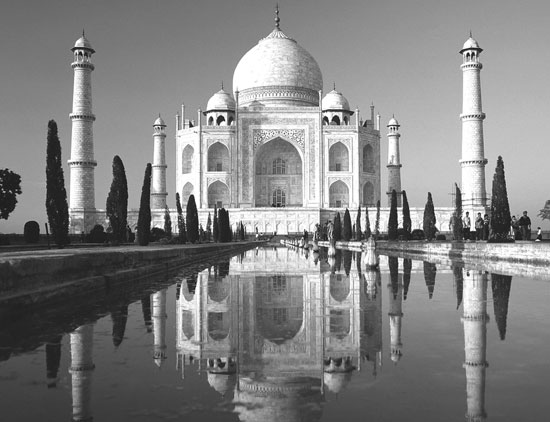
When you enter into the compound, you will feel really stunning, Taj Mahal the incredible monument of 16th century. Dream of a King who loved his wife deeply and imagination of an artist took shape in the form of Taj Mahal. A precious gift for world. Look out Seven Wonders of the World

A view of Taj Mahal from Agra fort, People admiring taj mahal beauty, the marble in the sky

Main entry gate of Taj Mahal, situated in Agra, beautiful lush green lawn with trees, equally balanced area.

Taj Mahal the beautiful architecture, amazing look, a piece of extraordinary art and wonderful example of mughal architecture in India. The Taj Mahal a dream of a king Shahjahan in memory of his wife Noorjahan. She died while giving birth to her 14 child. The King gone into deep sorrow, and thought of a monument and the shape took as Taj Mahal. The artisans and the worker comes from all over India and made hard work up to 20 years then complete the dream of Indian King

mapsNworld.com
Advertise on this site contact at
©All Rights Reserved "Maps N World" |
Sitemap
|